
Wohlenberg CityLine 4000 Binder Sensor Fault
A Wohlehnberg CityLine 4000 Binder print-finishing line stopped starting its gatherer with the binder. The fault was intermittent: sometimes after an empty-hopper stop, sometimes after idle time. Operators had already seen the machine recover after about half an hour with no parts changed.
We traced binder/gatherer interlocking on the gatherer PLC, confirmed the start-position proximity path, and found a cracked right-angle M12 on the sensor cable.
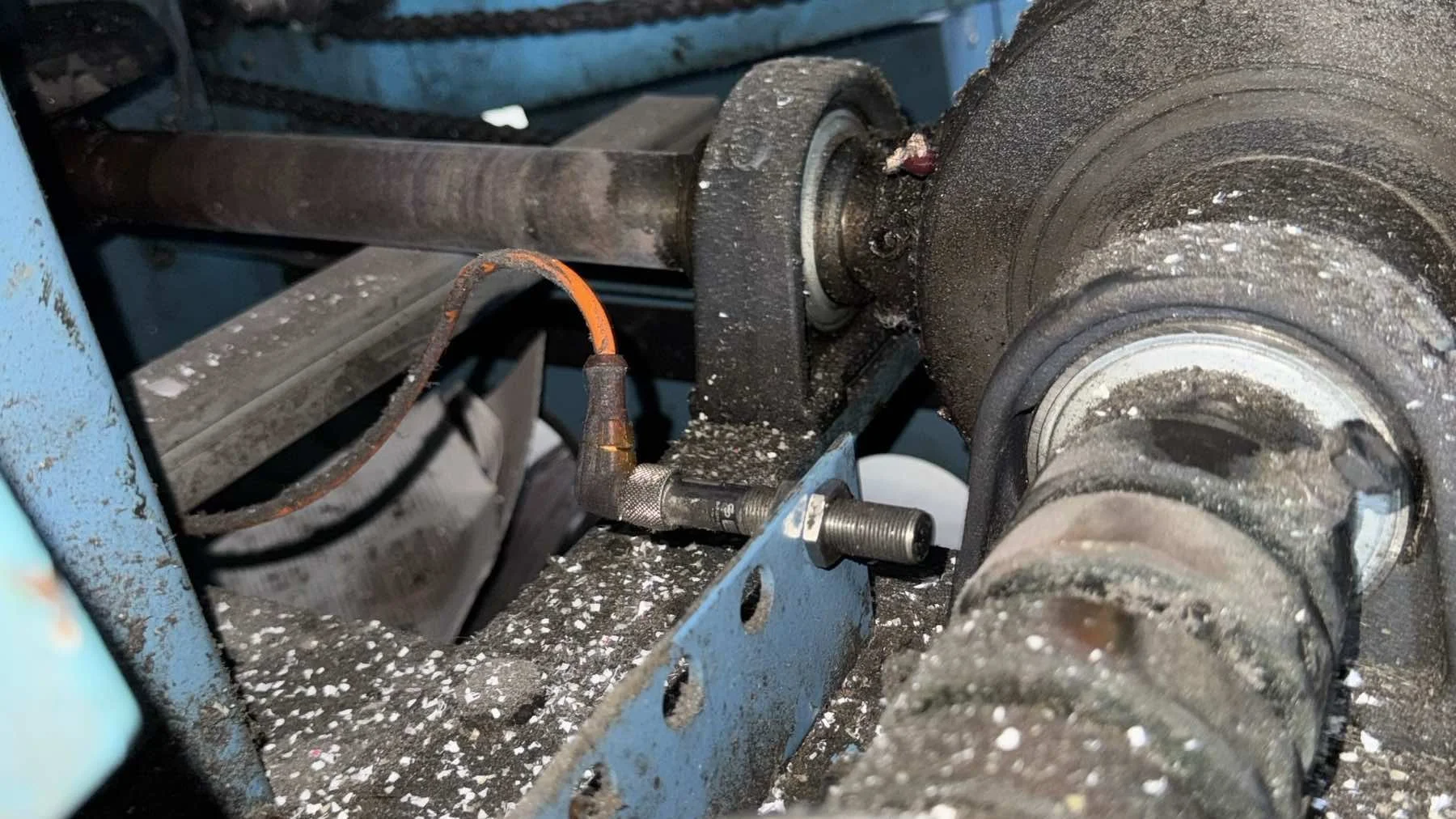
Start-position proximity — crack through the right-angle M12 on the orange cable to the Bernstein senso-plus sensor.
Fault behaviour
The binder would run; the gatherer would not. During a demonstration, the binder sped up when a gatherer start was attempted, consistent with the control system treating the gatherer as already running.
That rules out a simple “no motor power” failure. The clutch/brake enable path and the inputs that gate it were the useful place to look.
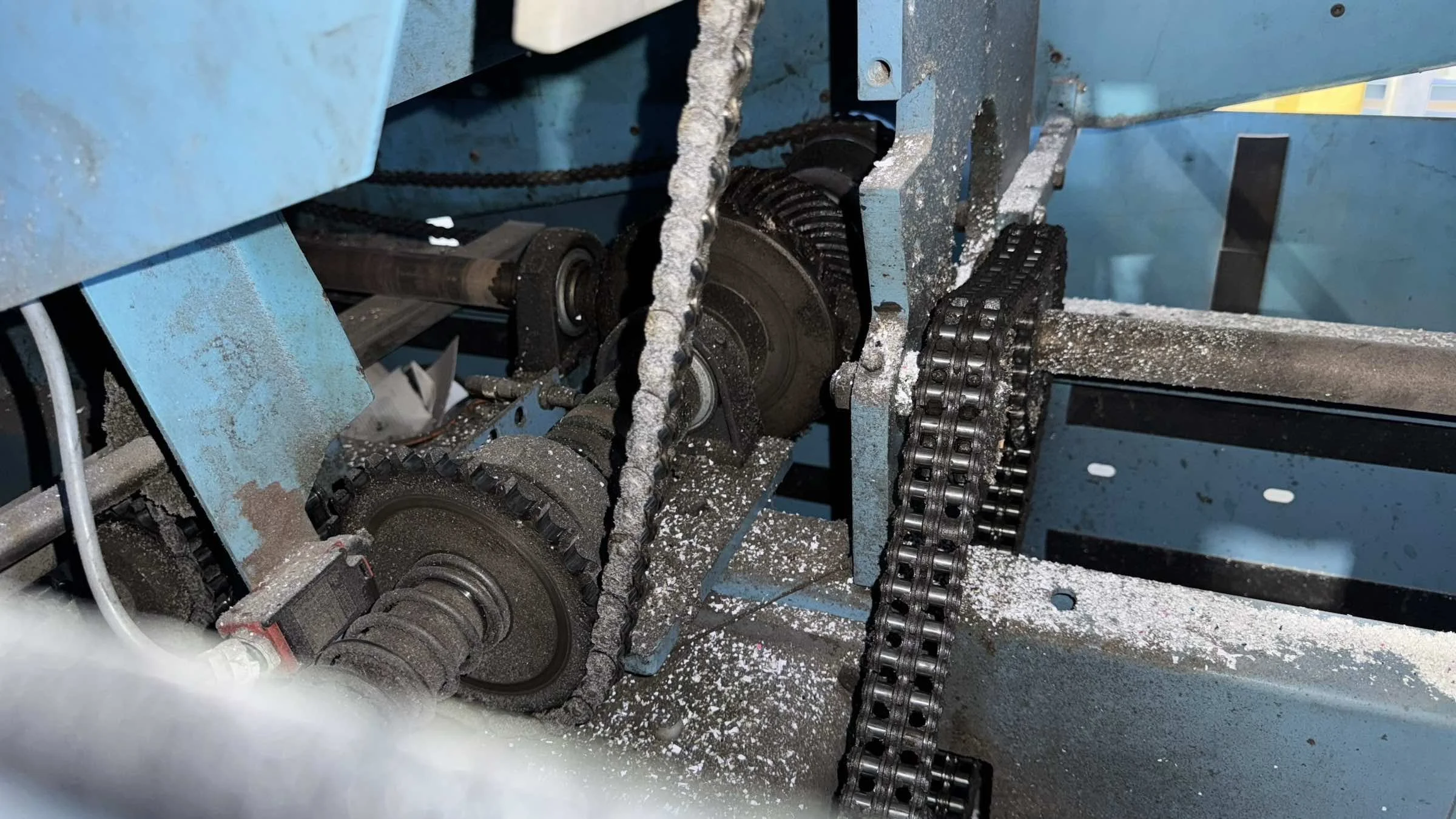
Gatherer drive area — cam, chains and sensors operate in paper dust and grease.
PLC checks
The gatherer main drive uses a clutch/brake. Status was read on the machine PLC through Kuhnke680.450.01 digital in/out modules (8× 24 V DC inputs / 8× 24 V DC outputs). Relevant points included:
Brake and clutch outputs on the gatherer I/O rack
Start-position input from a cam-driven proximity sensor (clutch enable depends on this — X4.02 on this machine)
Other status inputs that should remain asserted unless a fault is present
Early visits also showed rapidly pulsing guard-switch signals on the binder/gatherer interface. Those were noted; they were not the final cause.
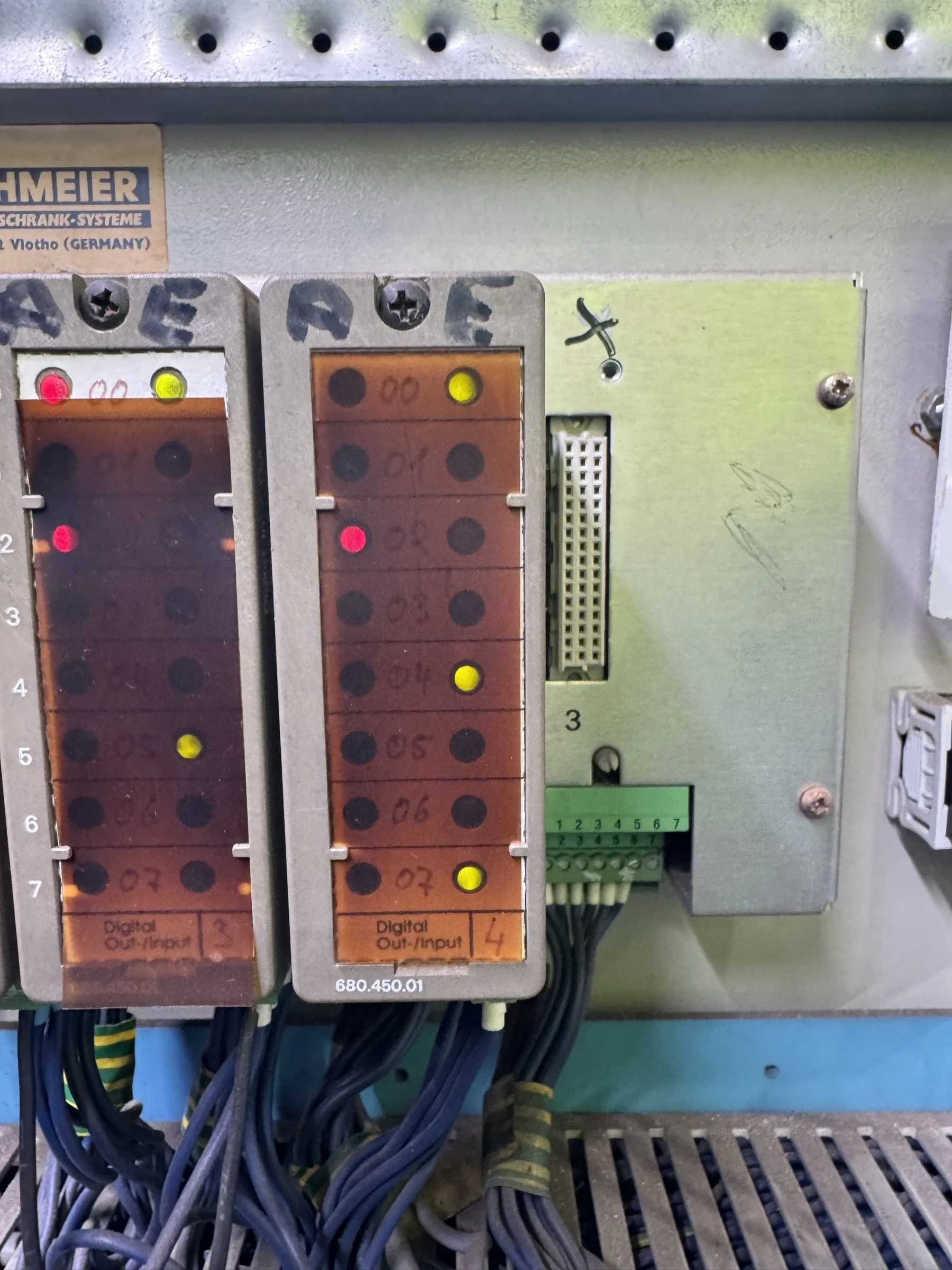
Kuhnke 680.450.01 digital I/O modules — start-prox activity is visible as the binder runs.
On more than one visit the machine resumed while inputs were still being mapped. No deliberate change explained the recovery. That pattern fits an intermittent connection.
Start-position proximity
On a later callout, after a stop from an empty hopper:
Brake and clutch outputs were off
The start-position proximity input was not flashing with the binder as it does in normal running
The sensor is a Bernsteinsenso-plus inductive proximity switch on a cam under the book-clamp area. With a valid flash on that input, clutch enable can proceed. Without it, the gatherer stays locked out.
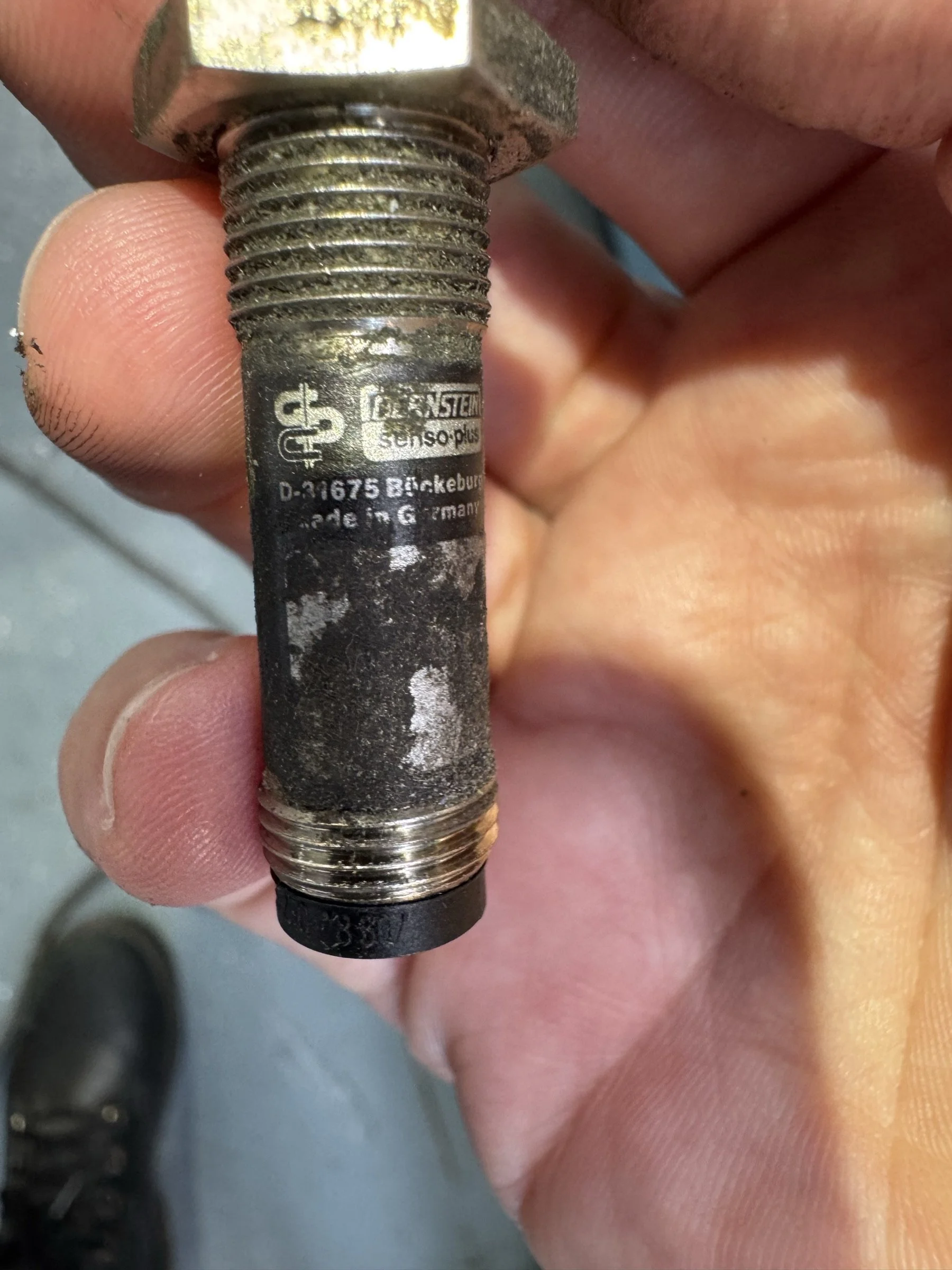
Bernstein senso-plus start-position proximity on its bracket, reading the cam.
Cable connector
The Bernstein sensor was removed and checked against metal: power and output LEDs behaved correctly, and the Kuhnke inputs responded. Refitted, the machine ran.
The cable connector did not. The right-angle M12 shell was cracked through. Dust and vibration at that joint explain the intermittent starts and the spontaneous recoveries.
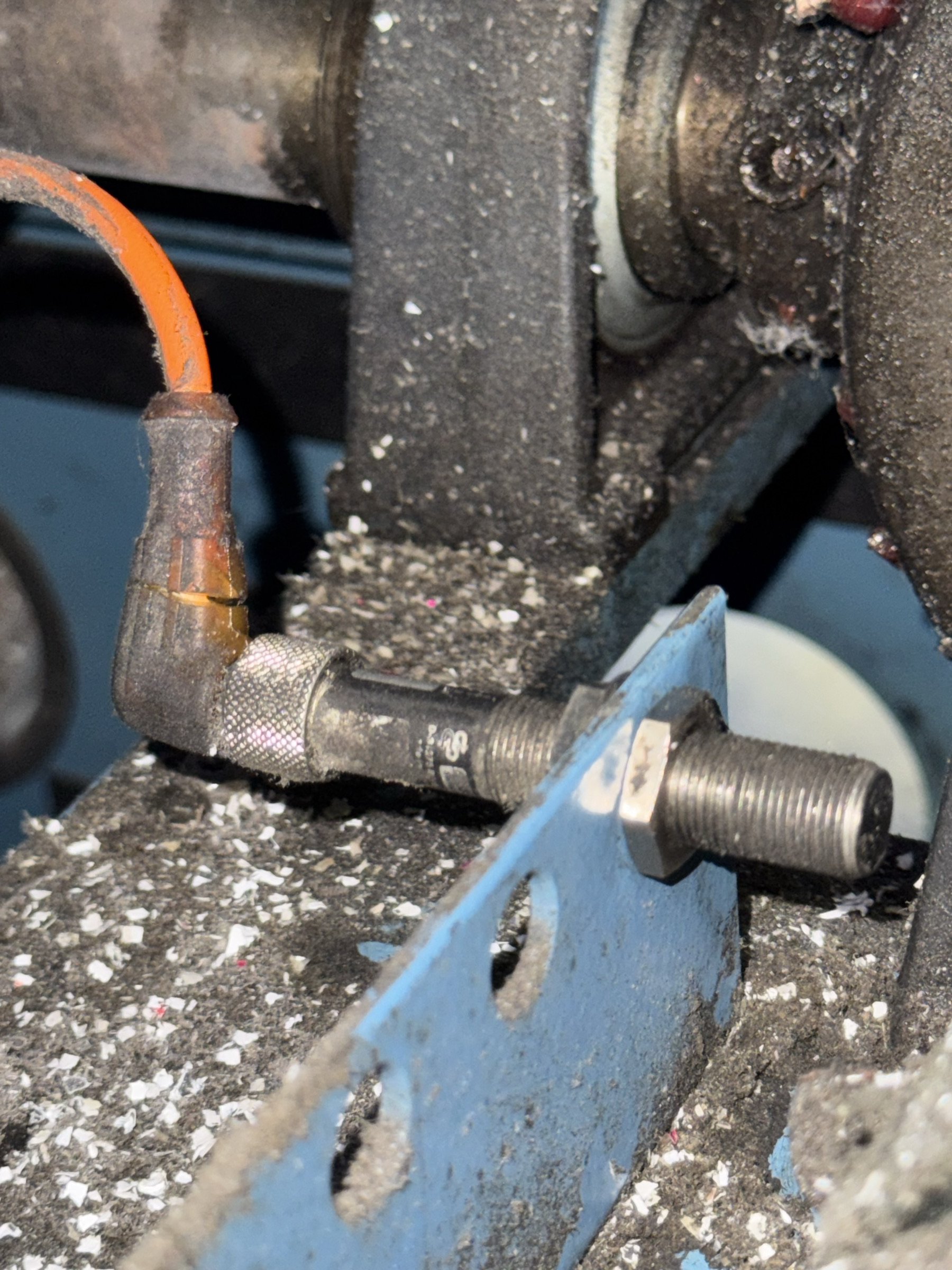
Cracked right-angle M12 on the start-sensor cable.
Production was restored with a used spare already on site: an M.D. Micro DetectorsAM1-AP-1H M12 inductive proximity (PNP, NO, 10–30 V DC). For a permanent cable repair we ordered ifmEVC008 leads — 5 m PUR, angled M12 socket, PNP, with operation and switching LEDs.
Intermittent start faults on finishing equipment often look like PLC or clutch problems. Sometimes they are. Just as often they are a sensor that only fails in place, a cable or connector cracked by vibration and dust, or logic that is working correctly — refusing to clutch in because the start-position input never arrives. If a gatherer or binder starts inconsistently, the useful work is to prove which input is missing and repair that path before the next unexplained stop.