
Danfoss 160kW Drive Repair
When a large variable speed drive drops out, the first symptom is often simple: a blown fuse. On a water-utility pumping site, that is what we were called to look at.
The drive was a Danfoss AquaDrive FC202 rated at 160 kW. There was a blown fuse on the power card — but that was only the start of the story. Gate-drive circuitry around the power stage had also been damaged. To diagnose and repair it properly, we removed the drive from site and brought it back to the workshop.
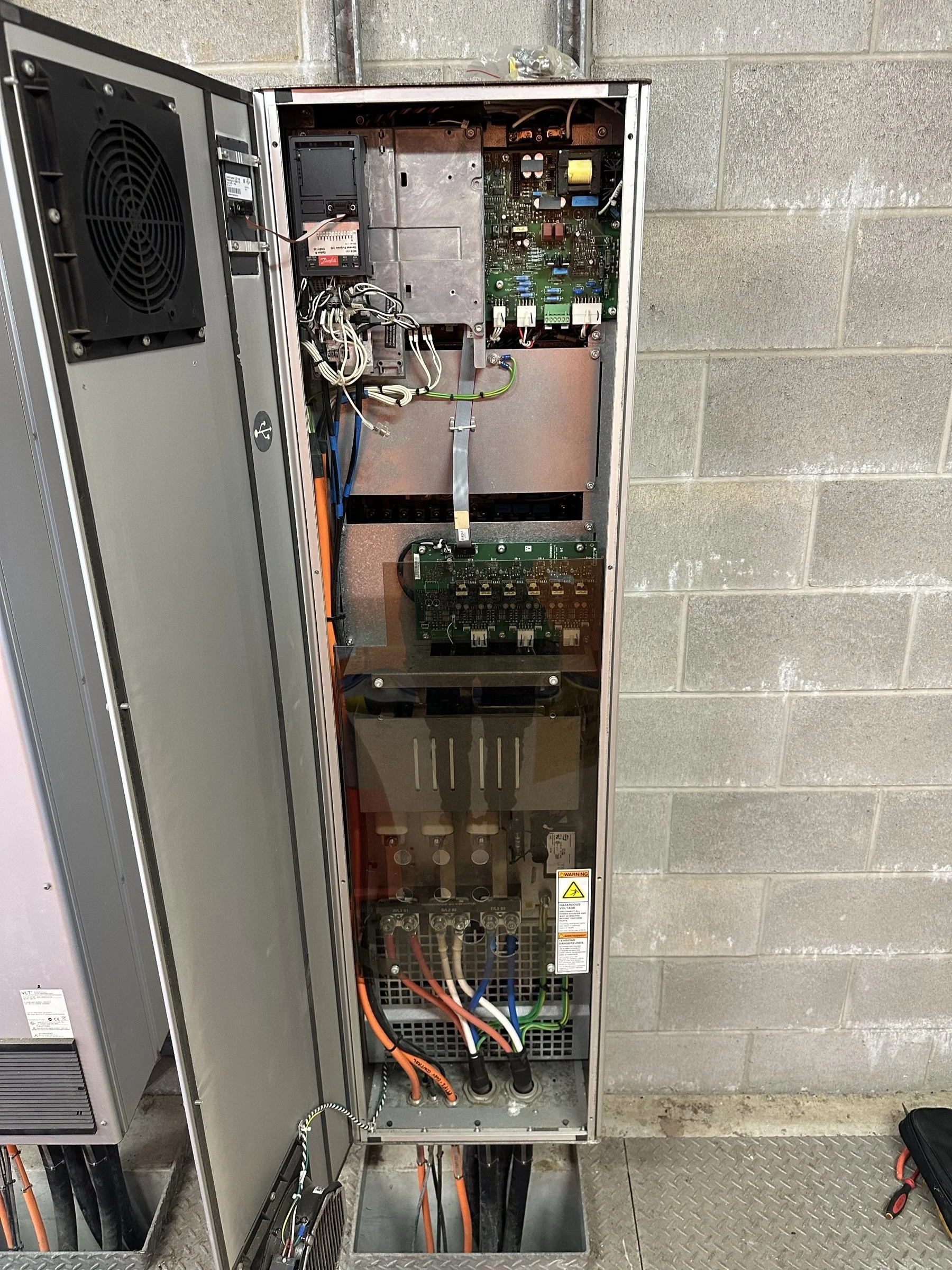
Danfoss FC202 cabinet open on site — control electronics above, heavy power cabling and motor terminals below.
What we found
Once the power card was out of the chassis, the failure mode was obvious. The front of the IGBT on the heatsink had been blown open — a high-energy short that had also taken out surrounding protection and drive components.
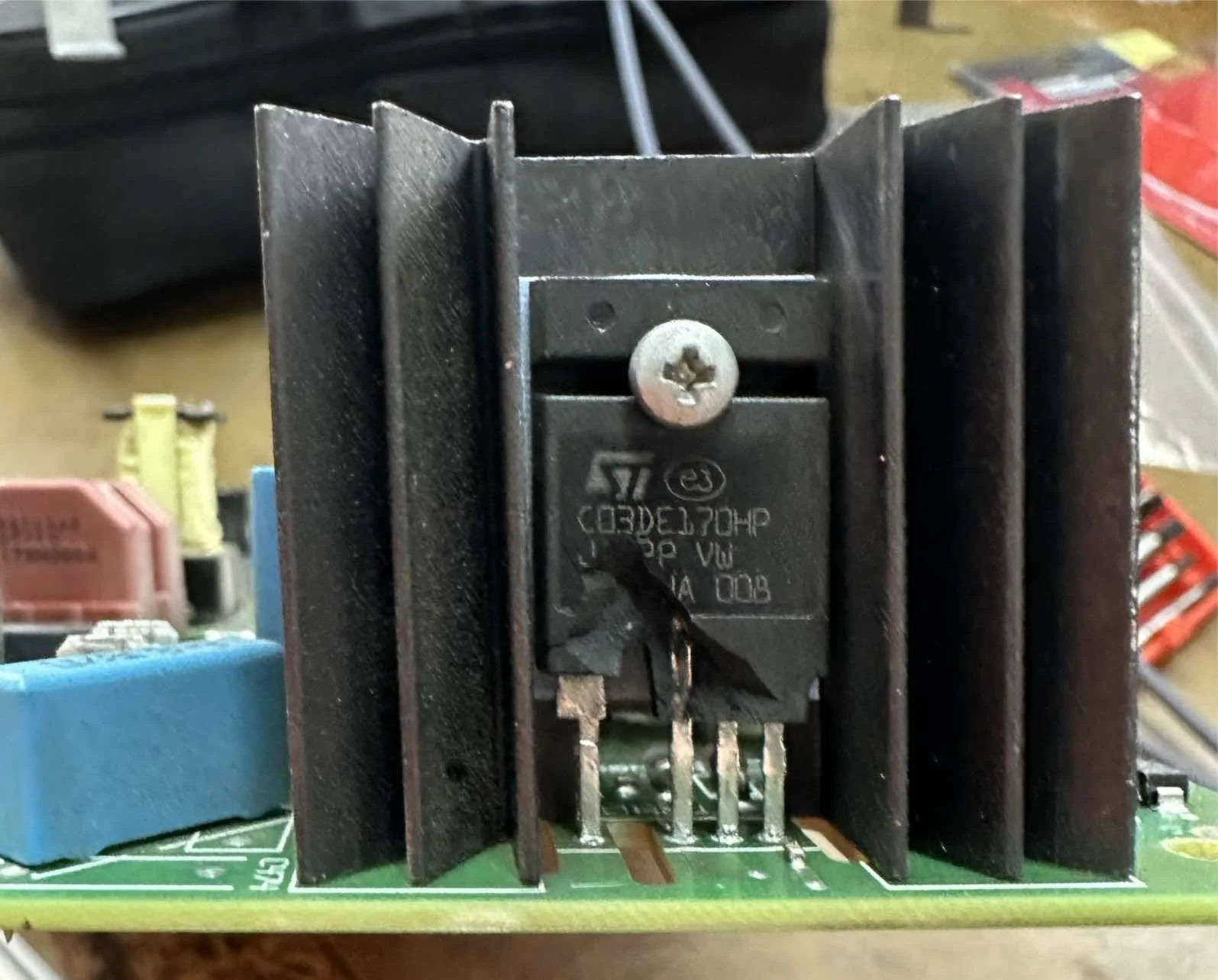
Failed power semiconductor on the power-card heatsink — casing ruptured by the short that took the drive down.
Tracing the gate-drive and local power circuitry showed the damage was not limited to one device:
Blown fuse on the power card (the original callout symptom)
Catastrophic failure of the power semiconductor on the heatsink
Nearly every diode in the related circuitry shorted
Collateral damage through the gate-drive stage
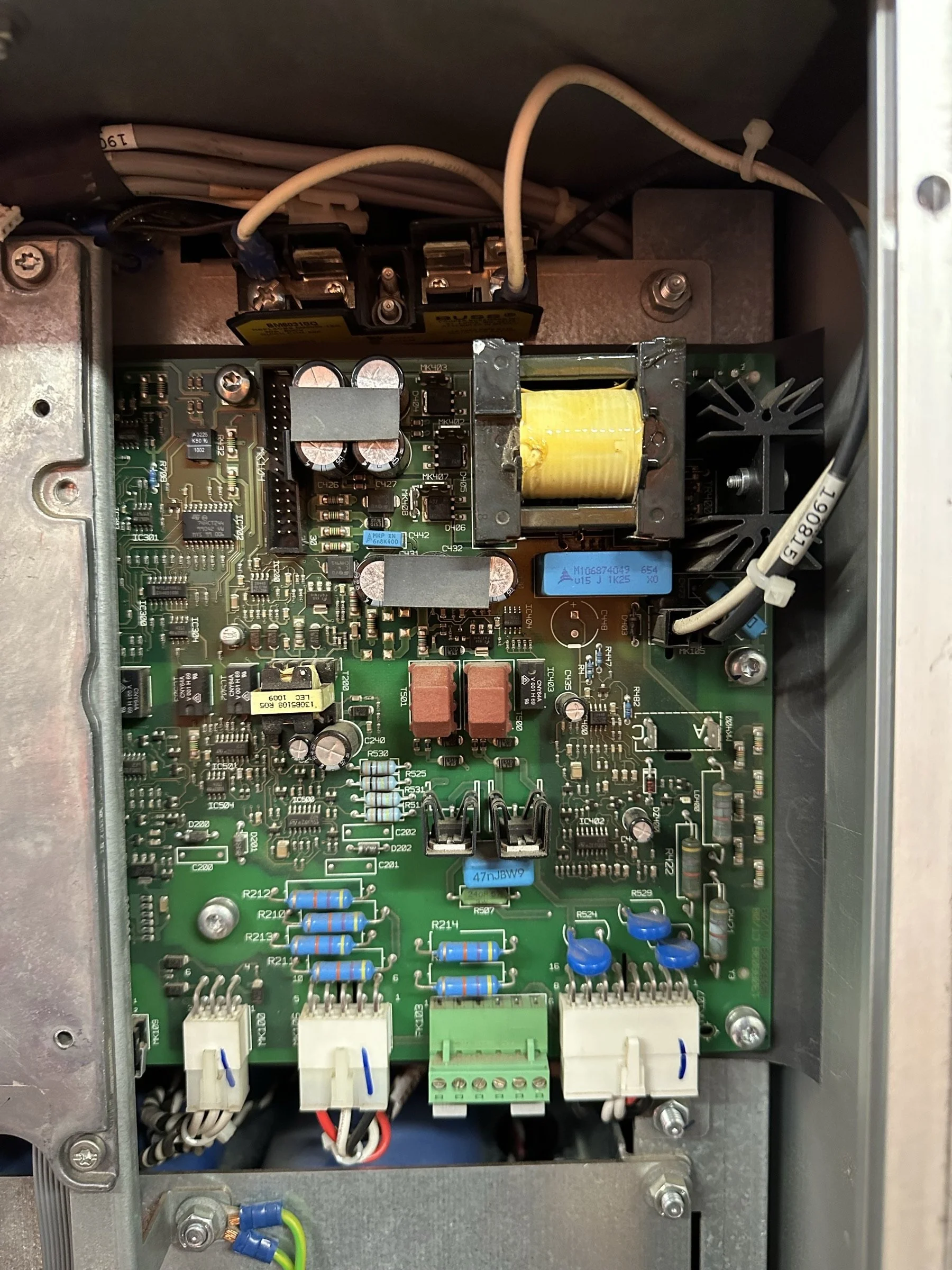
Power / SMPS card in the drive cabinet — the board that had to come out for a full repair.
That pattern is typical of a hard power-stage fault: the fuse trips because energy has already gone somewhere it shouldn’t, and several parts around the failed device are no longer trustworthy.
Obsolete parts, stock that mattered
The failed IGBT was discontinued. A like-for-like catalogue buy was not a practical path.
Because we repair Danfoss drives regularly, we already had a compatible device that could be refitted. That stock turnaround is often the difference between a workshop repair and a long wait — or a full drive replacement — when a critical pumping asset is offline.
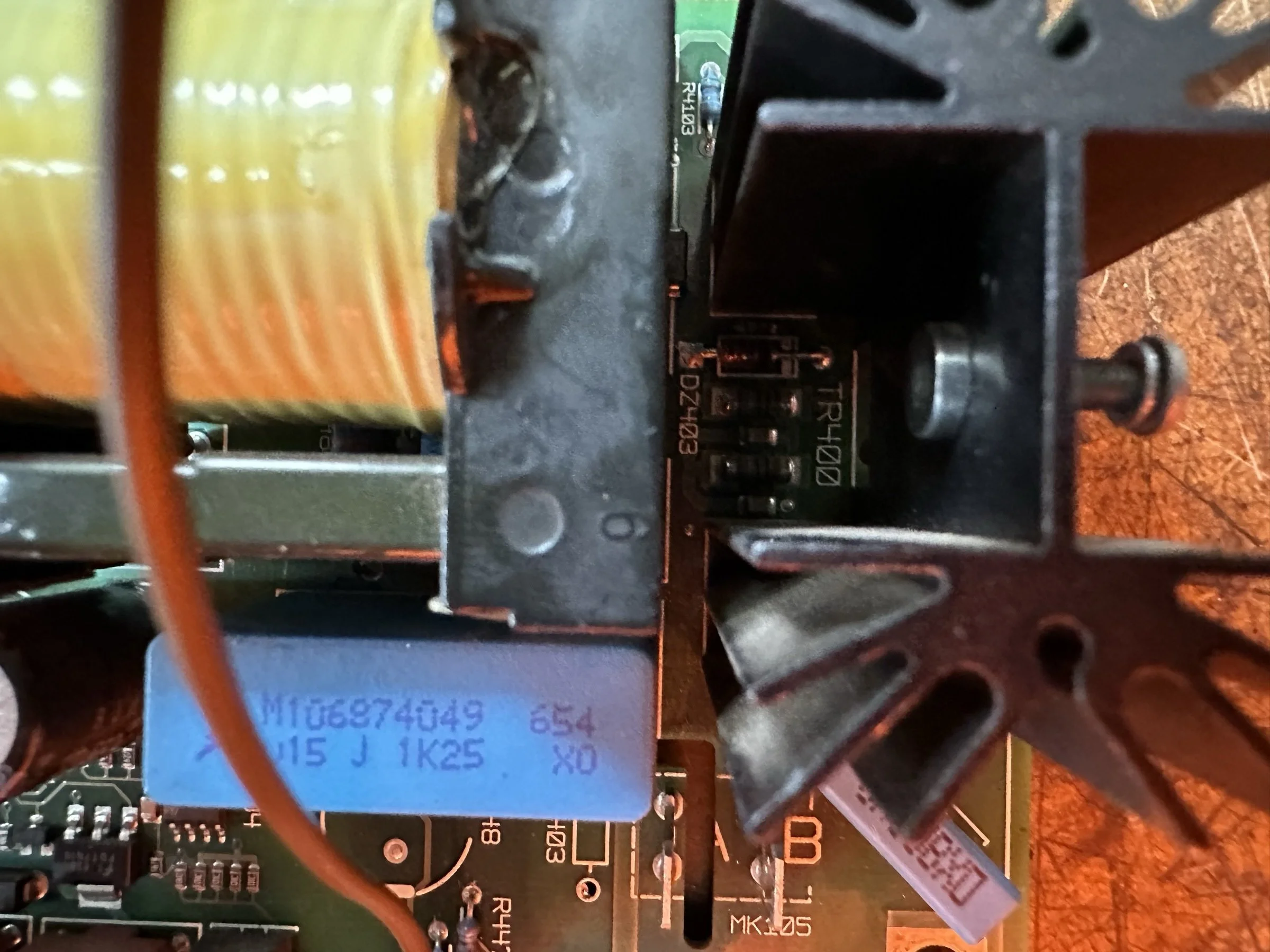
Close-up of the power stage area during diagnosis — heat and stress marks where the failure had concentrated.
Workshop repair
With the fault isolated to the power card, we:
Mapped the circuitry around the failed device so we understood what had to be right before powering anything again
Replaced the blown IGBT with a compatible part from stock
Replaced the shorted diodes and repaired damaged gate-drive components
Bench-checked supplies and switching behaviour as the card came back together
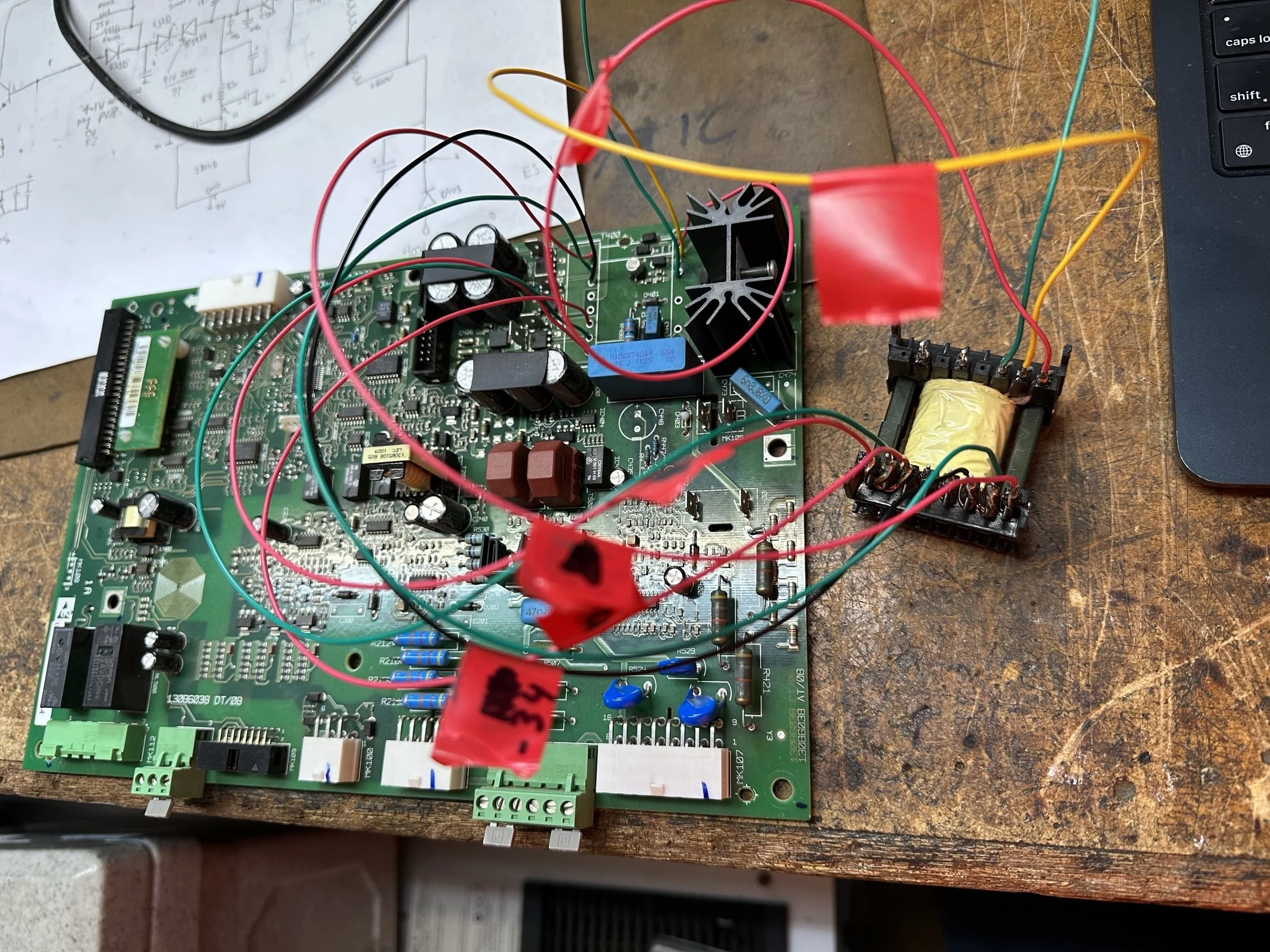
Component-level diagnosis on the bench — temporary test leads and a hand-drawn schematic while tracing the power-card circuitry.
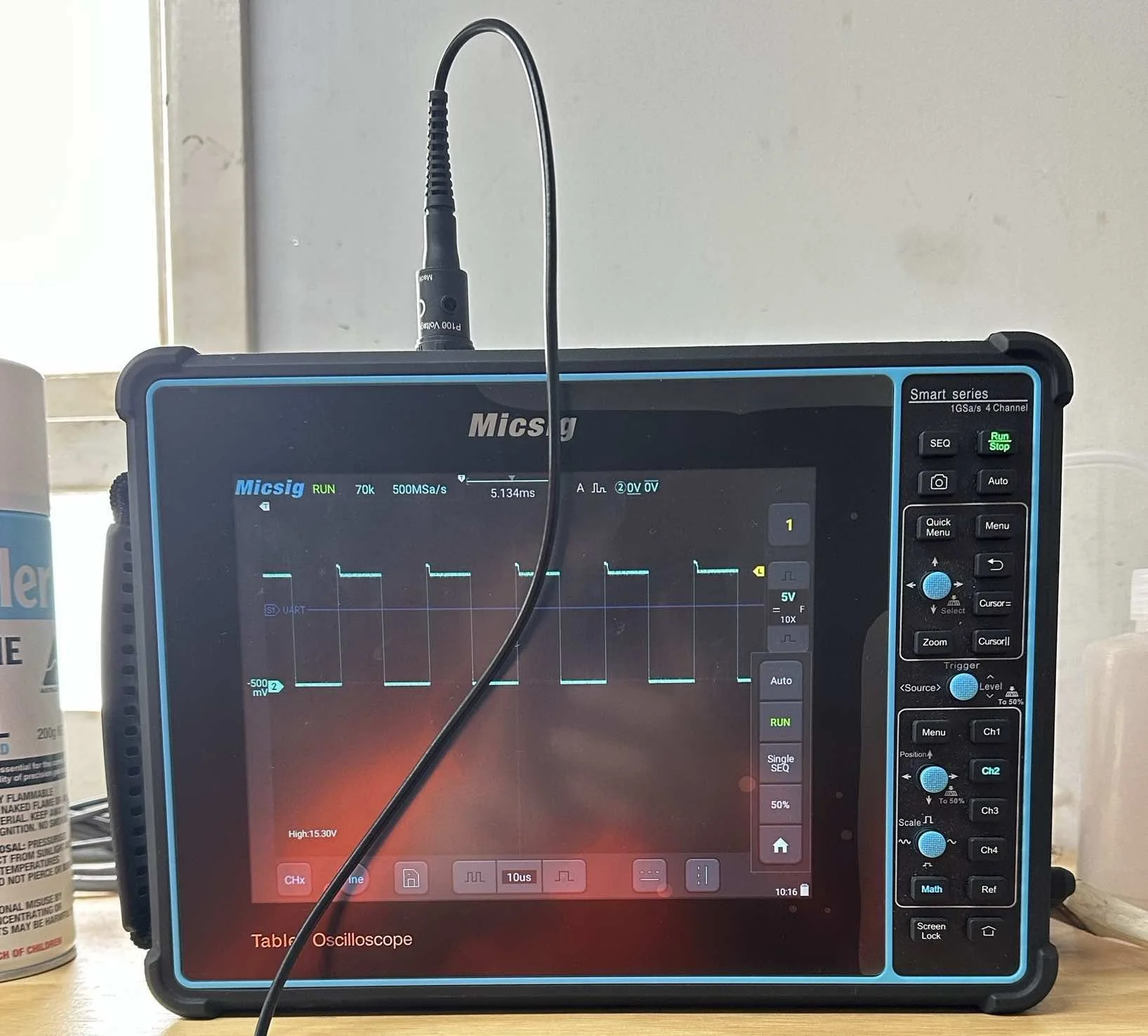
Oscilloscope check during prove-out — confirming supply and switching behaviour before the drive went back together.
Once the card was rebuilt and the drive reassembled, it went back to site and returned to normal operation.
Why this matters
A blown fuse on a large Danfoss drive is rarely “just a fuse.” Getting the asset back online usually means:
Separating symptom (fuse) from cause (power-stage / gate-drive failure)
Repairing at component level when a whole new drive is slow, expensive or unnecessary
Dealing with obsolete power semiconductors from experience and stock, not only from a parts catalogue
Proving the repair in the workshop before the drive goes back into a live pumping duty
If you have a Danfoss AquaDrive, VLT or similar industrial VSD that has fused, faulted or been written off as “board swap only,” we can often diagnose and repair it at component level and get it back into service.