
Egg Incubator Control Board Remake
Commercial egg incubators depend on stable, accurate temperature control. When the original control boards for a fleet of incubators became difficult to obtain — and existing boards were ageing — replacement wasn’t as simple as ordering a spare from a catalogue.
We reverse-engineered the original boards, designed modern drop-in replacements, and built a workshop calibration process so each board left us ready for a quick, low-risk install on site.
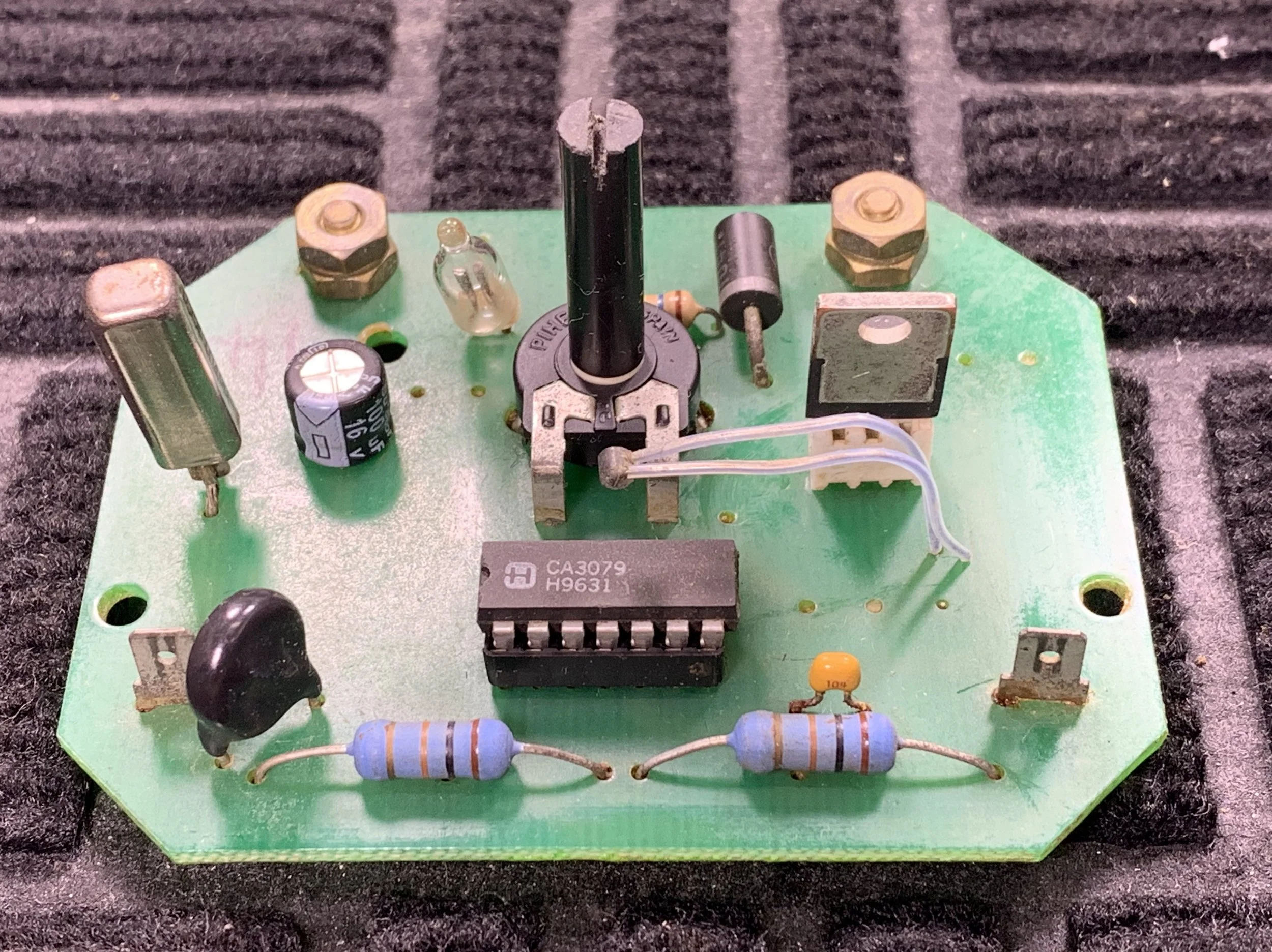
An original temperature control board from the incubators — the starting point for the remake.
The problem
The incubators used a dedicated temperature control PCB to switch heater power and hold the chamber near incubation temperature. Over time:
Original boards were failing or drifting
Key parts were obsolete or hard to source
A simple “board swap” from the manufacturer was no longer a practical path
Keeping the machines running meant recreating the electronics in a form that fitted the existing mechanical envelope, matched the original behaviour, and could be produced and checked in sensible numbers.
What we did
1. Reverse-engineer the original
We documented the existing PCB — power path, sensing, switching and safety components — so the remake would behave like the equipment expected.
2. Redesign a drop-in replacement
We laid out a new board that kept the same overall shape and connection points, while updating the design for manufacturability and ongoing parts availability.
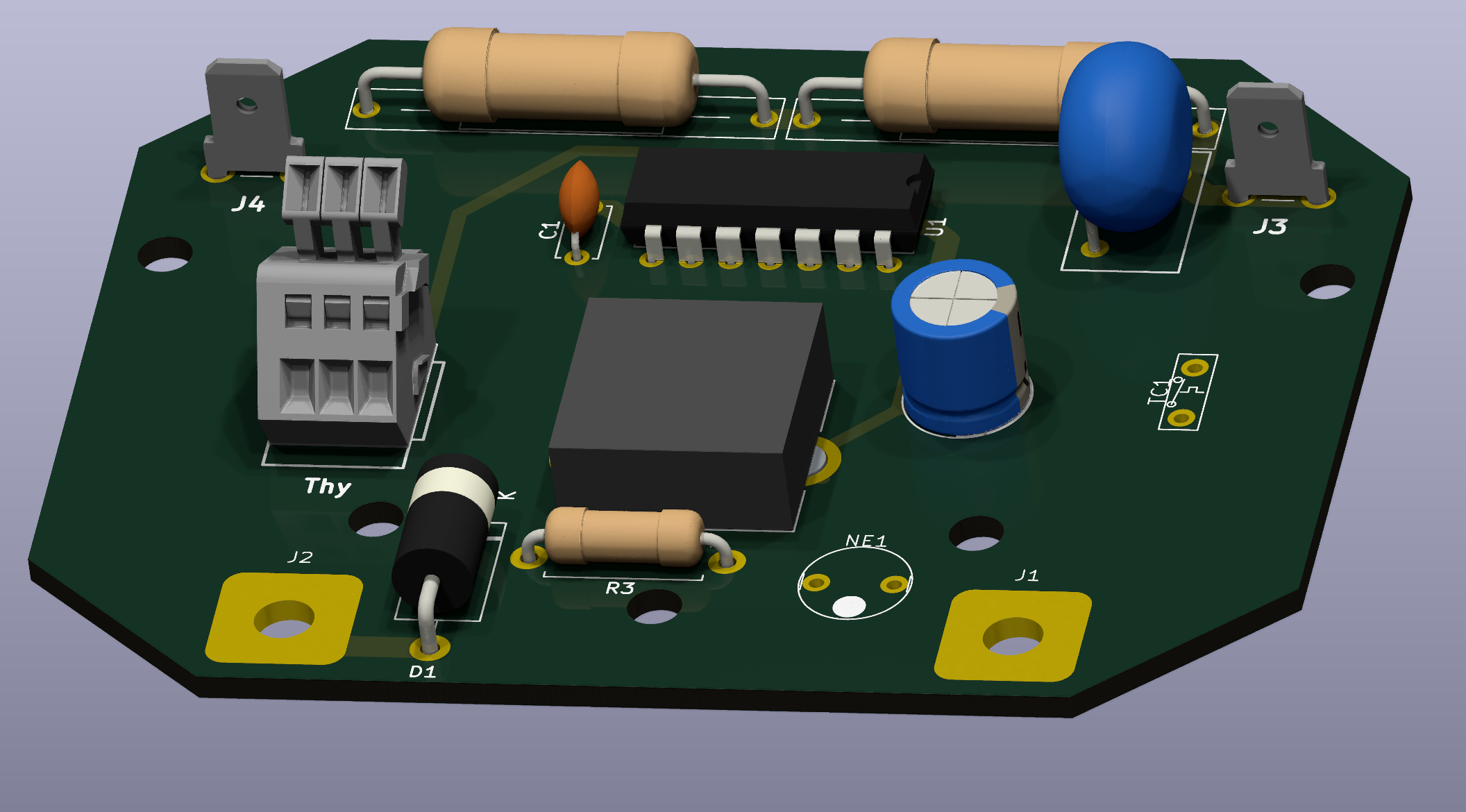
3D render of the redesigned control board — same form factor, updated design.
3. Calibrate each board for real IC variation
When we characterised the temperature-control ICs, factory calibration proved significantly worse than expected. Left alone, that spread would have forced a wide onsite adjustment range — and a wide range is exactly how boards get set too hot or too cold in the field.
Instead, we selected trim resistors individually for each board, matched to that board’s IC. With each unit brought into line in the workshop, we could dramatically narrow the remaining adjustment range. That means:
Much lower risk of incorrect temperature setup on site
Significantly shorter onsite setup time
More consistent behaviour from board to board once installed
4. Prove it on a proper test system
Temperature control can’t be signed off on looks alone. We designed a dedicated test and calibration arrangement so heater control, sensing and trim setup could be checked under controlled conditions before a board left the workshop.
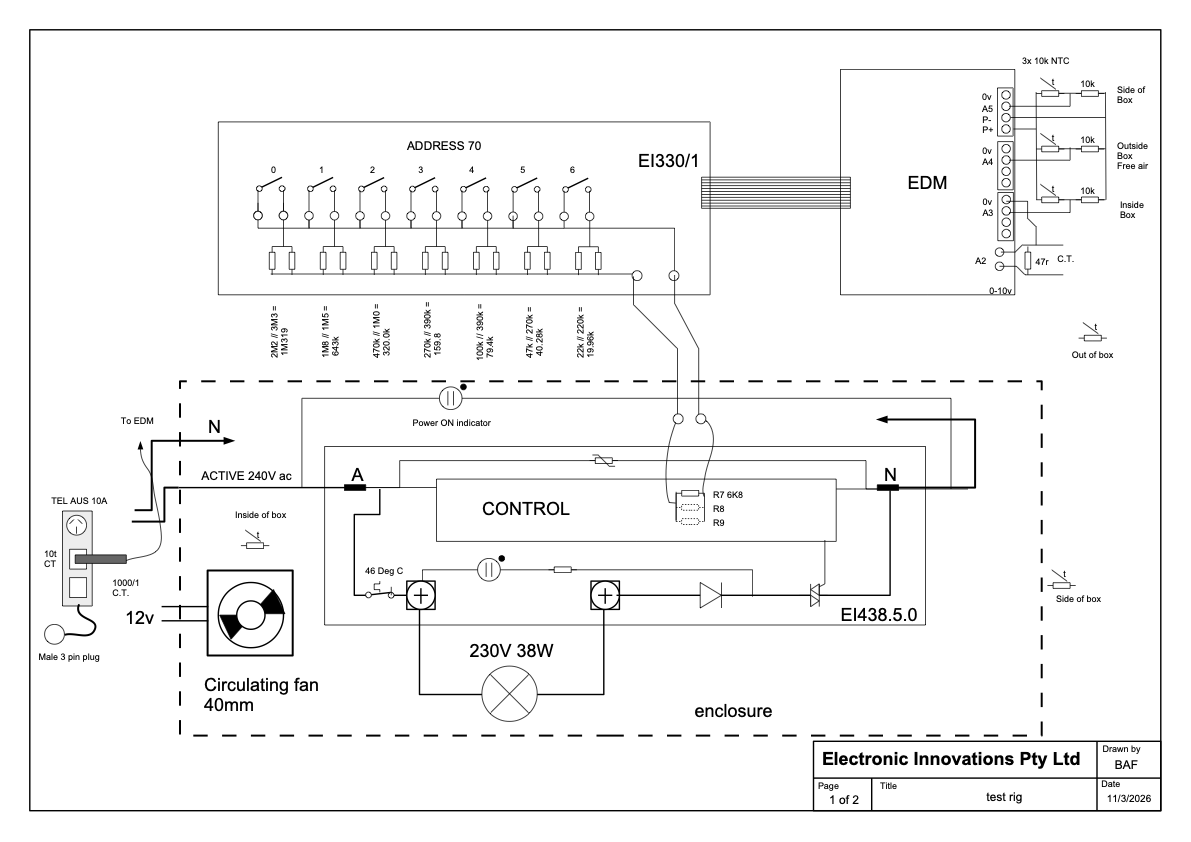
Schematic of the workshop test and calibration system used to verify boards before despatch.
5. Produce and verify in volume
Once the design and process were proven, we manufactured and calibrated boards in batches — not one-off prototypes — so multiple machines could be restored with consistent results.
Why this matters
This is the kind of job where repair and design meet:
Obsolete electronics don’t have to mean scrapping good mechanical plant
Drop-in replacements reduce installation risk on site
Workshop calibration can absorb part-to-part variation so the field adjustment stays tight and safe
Narrower setup range means less time on site and less chance of a board being left too high or too low
If you have industrial equipment held back by unavailable control boards, we can often reverse-engineer, redesign and manufacture a practical replacement — and prove it on the bench before it goes back into production.